
Let's Talk About the Memoir
Hello from the last day of my residency at Write On, Door County. For the past two weeks, I’ve been living in a house in Fish Creek, Wisconsin and enjoying the longest social media break I’ve ever taken. Door County is on a peninsula that juts out between Green Bay and Lake Michigan. It’s a summer place, and, my stay here only reaching mid-April, it’s been quiet.
When I went to the nearby state park, I had every tree and view to myself. When I went to a gift shop, it was still closed for the season. When I treated myself to a massage, it was the first time the spa’s card reader had been used in six months. “Ooh! You smell really good,” the spa employee said when I was checking out. “I don’t mean that to be weird; I just haven’t smelled that lavender oil in a long time.”
This place is only just about to wake up for the year, and it feels kind of sacred to be here right before it opens its eyes.
Two weeks has been enough time for me to see most of the ice and snow melt in the bay that’s a short jog downhill from the house.
Two weeks, I’ve learned, feels very long at first, luxuriously spreading out before you. Then, like film being gobbled up by a malfunctioning projector – Poof! – It’s time to drive home.
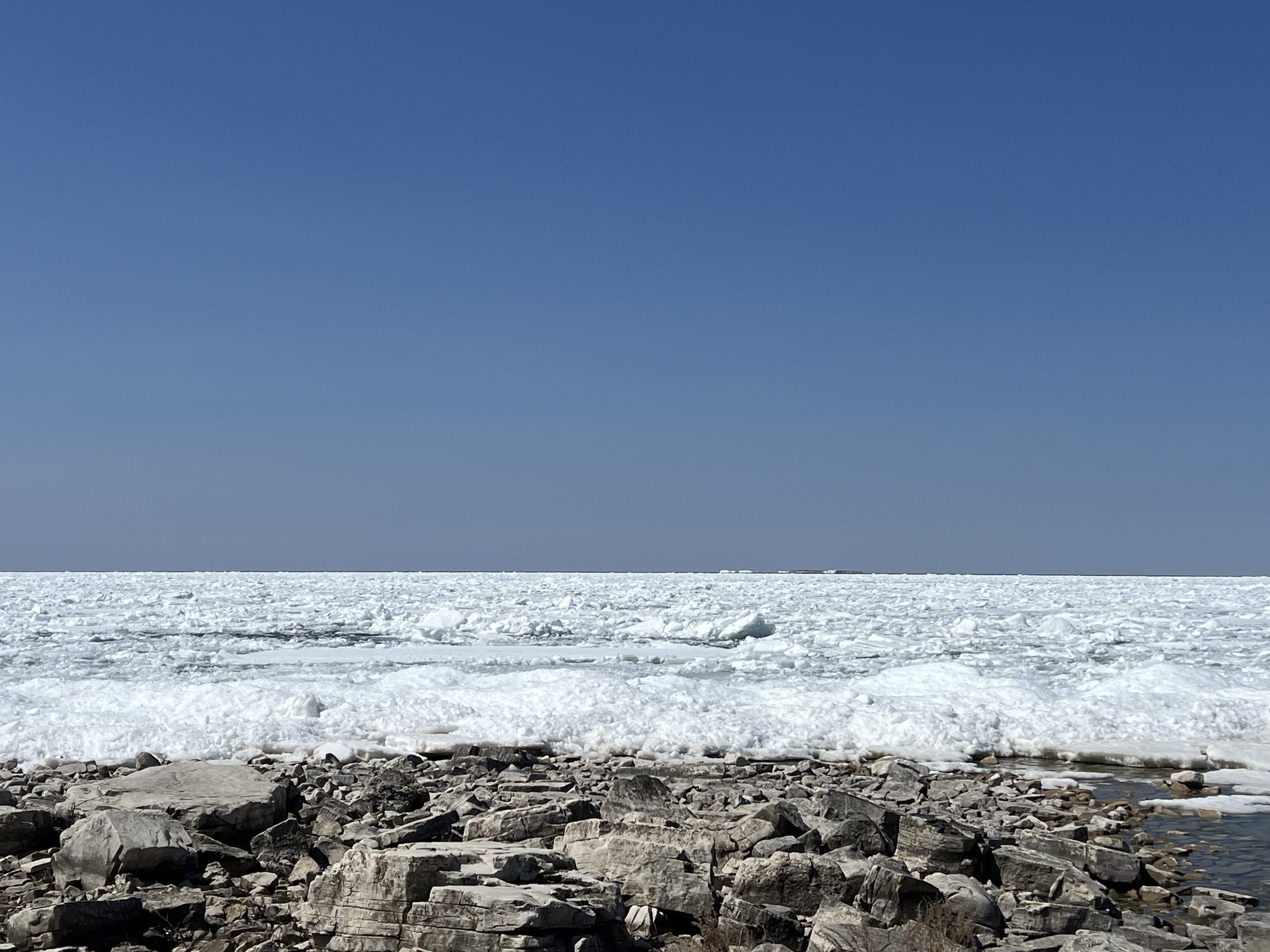
Five days ago
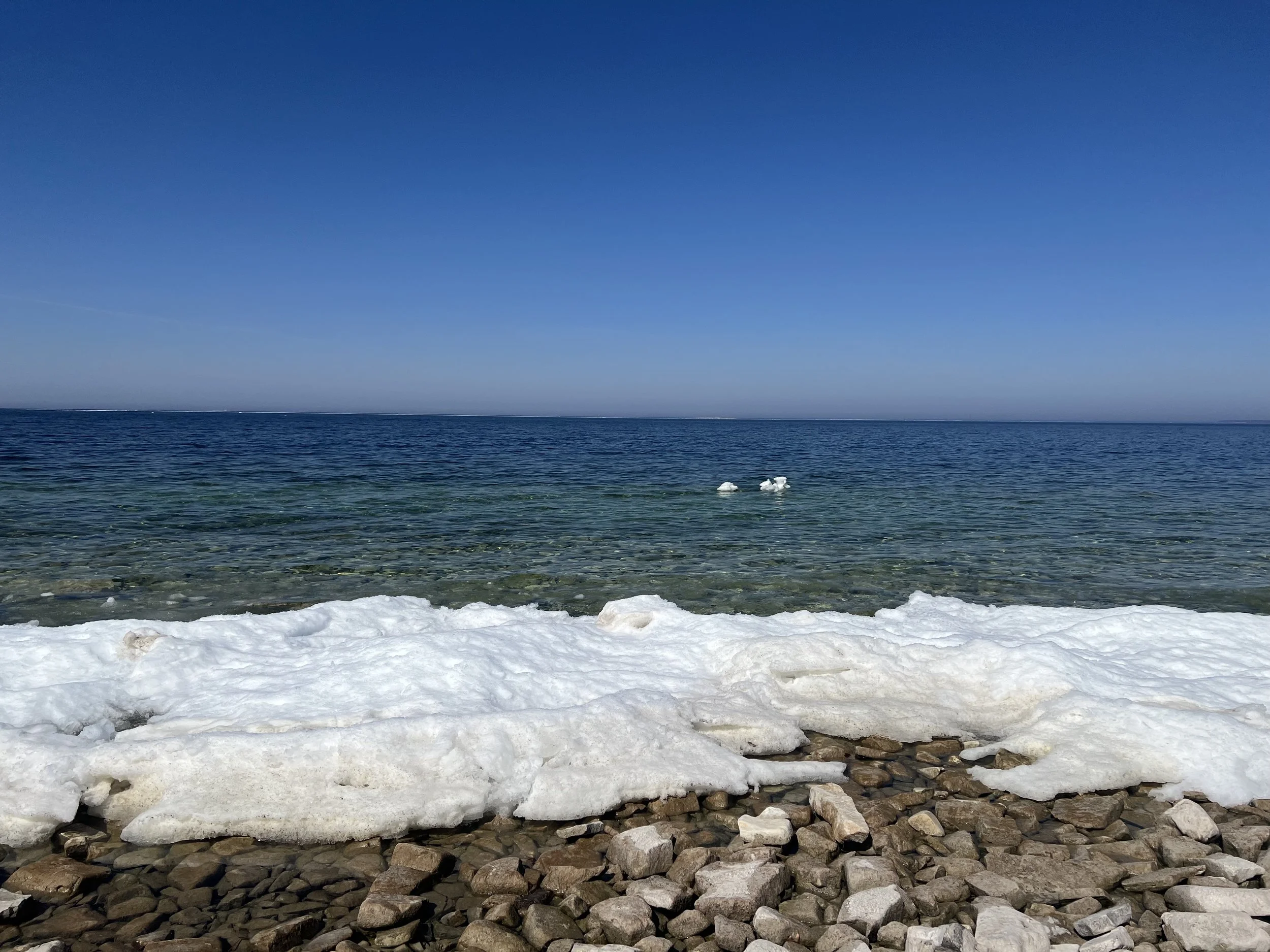
Yesterday
One of the projects I’ve been working on here is my memoir. Because I’m still in that early haze of writing to find out what I have to say about what I’m writing about (say that five times fast), I couldn’t tell you what the larger point of my memoir really is yet. But the subject is my relationship to piano.
My piano background is no secret; it comes up all the time. It inspires a lot of what I write, teaching piano is a significant part of my life, and it would feel wrong to introduce myself without it.
What I have more trouble admitting is just how difficult it is for me to actually talk, in any meaningful way, about how I don’t practice or perform anymore. I can’t tell you how many times someone has asked me, “Do you at least still play for fun?” and I have bravely smiled and shaken my head in lieu of crawling into a hole and staying there because nobody wants to hear this answer and I don’t have any logical explanation for it.
I grew up wanting to be a concert pianist and wanting to be a writer. Piano won that competition for energy for a long time, and it was grueling work. I loved music, but once I got to music school—my teenage dream of living and breathing classical music in New York City come true—I just felt like I got slammed with You’re not good enough and Why aren’t you good enough yet? and What is wrong with you that you aren’t good enough yet?
Never one to be discouraged—especially when I could smell the scents of sexism and elitist disregard for the entire Midwest—I exerted all of my effort and more to push back against that slamming, working to prove myself over and over again. This turned into chronic back pain, severe performance anxiety, and a constant state of dread that finally pushed me into admitting that the thing I really wanted to do, the only thing I really wanted to do, was write.
That journey, oversimplified here, even more oversimplified when I say “I used to be a pianist” as if I’m telling someone about a shirt I used to wear, is a really difficult one for me to make peace with.
Through the work of this memoir I’m kind of just asking myself: What the hell was all that?
And: How can I feel okay about it?
Did I fail?
How did I fail?
Who did I fail?
Where did the other Me go when I rejected her? Is she okay?
Because I often feel like she’s still hanging around deep in my psyche, and she is not okay, and I do not know how to heal her.
Past Selves
To this end, I did something a little emotionally dangerous when I loaded my Fiat up for the drive to my residency. I put all my diaries, which I have kept from age eight up through today, into a box and brought them along. I’ve been reading them in chronological order, which is something I’ve never done before.
And, as you might be thinking already, whoa.
When you’re reading diaries, it’s alarming how quickly an eight-year-old becomes a thirteen-year-old becomes a twenty-five-year-old. In my case, every era of Me struggled with the same tension between piano and writing. And reading all this, I’ve had to re-consider my own self-narrative, because some elements of how I think about my past have been swiftly disproved on the page by a nine-year-old.
I’ve gained a clearer understanding of this aspect of the memoir work ahead of me: to get as close to the truth as I can get, I’ll need to do my due diligence in researching and honoring these past selves who always, always wanted to be a writer—but many of them also really, really wanted to be a concert pianist.
And we’re all gonna have to find a way to understand each other.
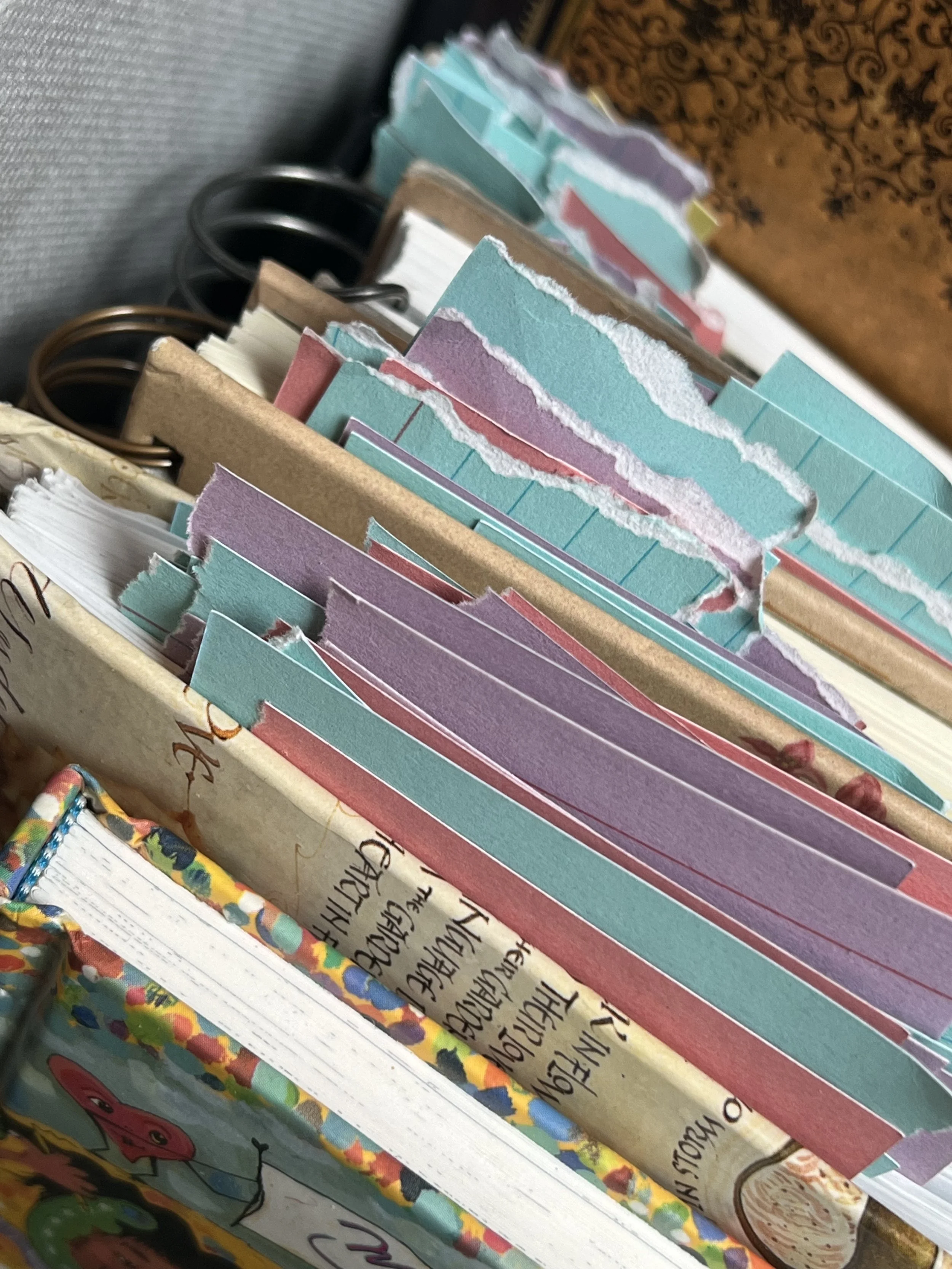
A peek into my memoir research process: childhood diaries. Blue cards mark writing about piano dreams, pink cards mark writing about writing dreams, and purple cards mark all the little girl life insights that just make me want to hug her.
Reading diaries spanning two decades has passed by in a similar way to the two weeks of residency life. At the start, time is slow, childhood is an endless place, then – Fwoop! – Here you are, sitting at a kitchen table in Wisconsin, where you’ve just accidentally referred to your husband of two-and-a-half years as your “boyfriend,” considering how much faster it’s all going to go from here.
This awareness of the fleeting nature of here and now is like a lightning bolt for creativity. Because a creative act requires us to do something right here, right now. It requires us to meet the moment we’re in, whether we like the moment or not, and do something with it.
In the documentary Come See Me in the Good Light, which is about poet Andrea Gibson and their life with terminal cancer (and so much more), Gibson talks about how much dying put living into focus for them.
I am not dying of terminal cancer, but I’m pretty sure that reading your diaries is just a safer way of seeing your life flash before your eyes. And seeing your life flash before your eyes has a way of making you want to do the things that are most important, right now. Most strikingly, it has a way of making you know what those things are.
Or, as 12-year-old Lillie thought of her writing and piano dreams: “there’s really no point in dreaming about my future careers when I can do them right now! That way, when the real world arrives, I’ll have like, 10 years of experience behind me!”
(I don’t know, man, I was just born like this.)
I hope that if you’re reading this, you can take your own creative act in this moment—however small or quick or gentle, whether it’s an act of art-art or the art of living. Because time will continue marching ahead, but this present moment is right at our fingertips for the taking.
Lots of love on this Sunday morning from all the Lillies of past and present to the yous of present and future.
I’m sad to be leaving Door County, but no words are strong enough to express just how excited I am to arrive home, join the budding springtime world outside of my now overexamined brain, and smooch my fluffy cat—who will only care about whether or not I’m going to feed her.
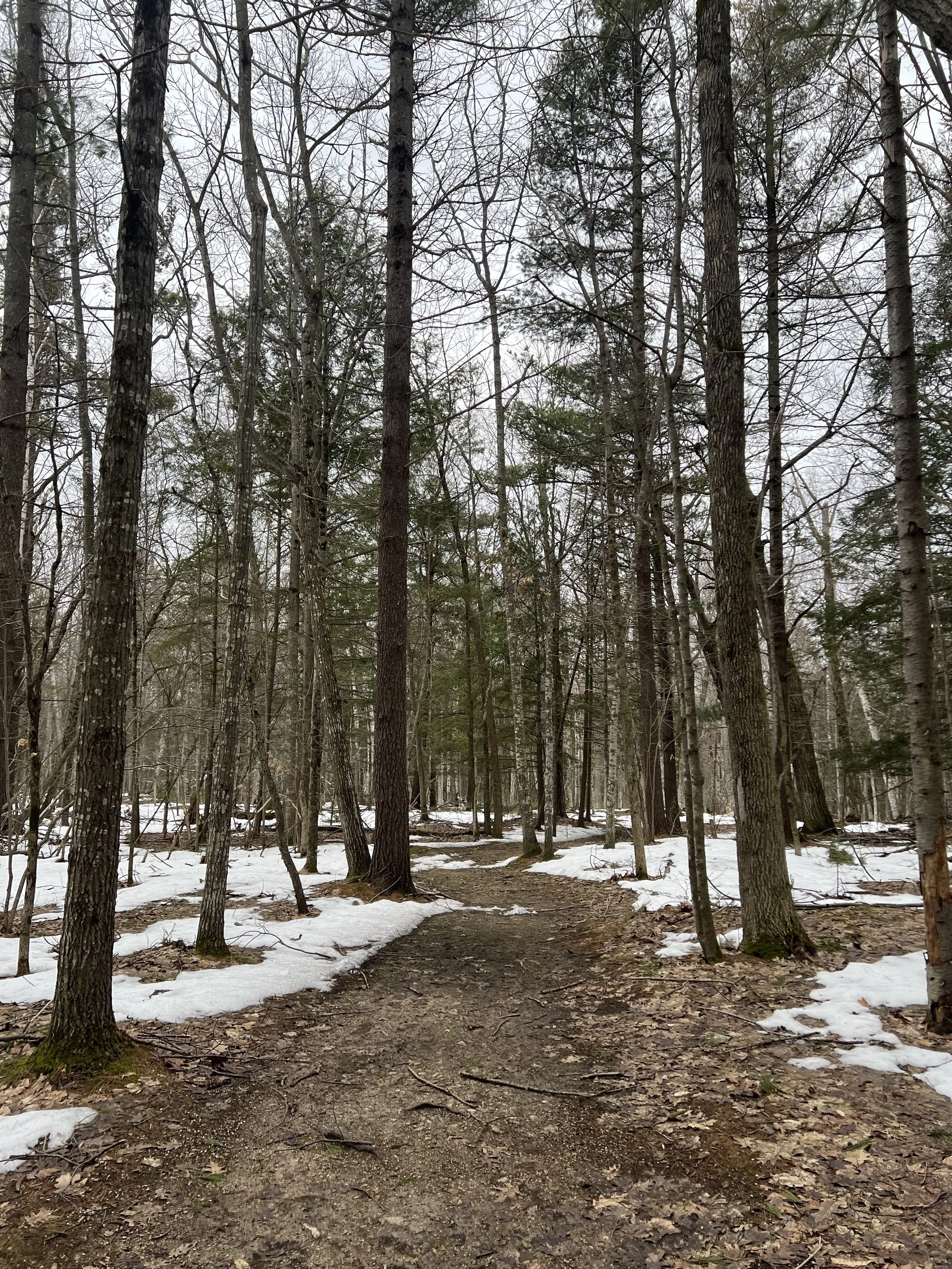
Looking for the perfect writing residency? You can learn more about Write On, Door County here. (They also have a multi-genre writing conference coming up!)
If you haven’t seen the documentary (which I highly recommend), this is a short clip from Come See Me in the Good Light.
And, to lighten the mood while staying on the chasin’ dreams theme, King Tuff has a new album out.